range 란
엄밀하게 애기하면,range는
숫자들의 immutable sequence 를 생성하기 위한
Lazy Iterable (메모리 효율적인)
을 나타내는 built-in type이다.
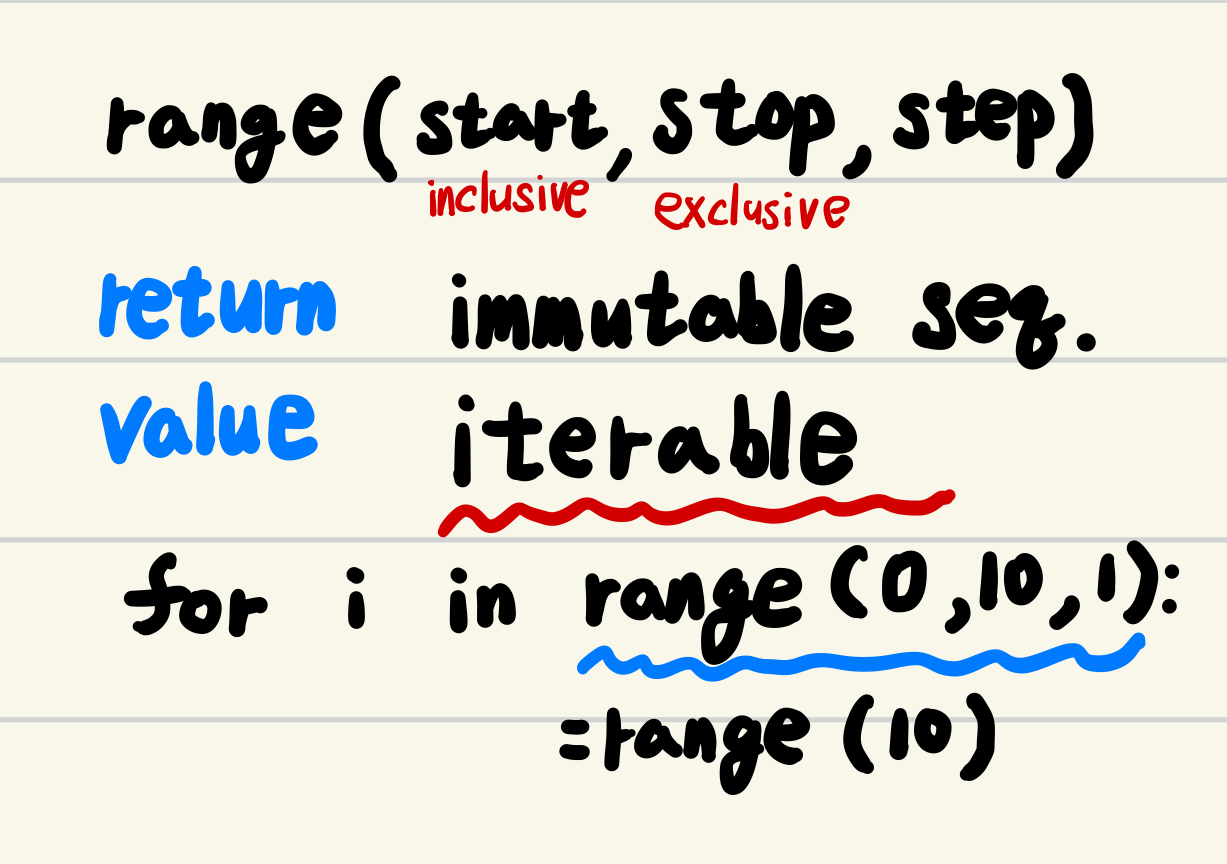
즉, 흔히 built-in function으로 애기하는 range() 는 사실은 range class의 instance를 생성하는 생성자에 해당한다.
sequence는 index를 통해 접근 가능한,
즉 item들이 놓여있는 순서가 의미를 가지는 자료구조를 추상화한 것이다.
https://dsaint31.tistory.com/569#Sequence
[Math] Sequence (수열) and Series (급수)
Sequence수열, 열 이라고 불림.numbers나 objects 들이 순서를 가지고(ordered) 나열된 것을 가리킴.order(순서)가 의미를 가지며, (order가 다르기 때문에 )중복이 허용이 된다.대표적인 예로 arithmetic sequence(
dsaint31.tistory.com
0에서 19까지 1씩 증가하는 list 를 만드는 방법에서
range와 list생성자를 다음과 같이 사용한다.
a = list(range(0,20,1)) # list(range(20))
range의 생성자에서 paramerter들은 다음과 같음.
- 첫번째 parameter는
start로 sequence의 첫번째 item에 해당하는 숫자임. - 두번째 parameter는
stop으로 해당 숫자보다 하나 적은 숫자가 sequence의 마지막 item이 된다.
(negative step의 경우엔 하나 큰 숫자가 마지막 item이 됨. 즉, exclusive임) - 세번째 parameter는
step으로 sequence에서 인접한 item들 간의 차이가 얼마나 되는지를 나타낸다.
흔히 argument를 하나만 줄 경우, start=0, step=1로 기본 할당되고, 주어진 argument는 stop으로 동작한다.
argument가 두 개 주어질 경우, step=1로 기본 할당되고 나머지 parameter들은 순서대로 argument를 값으로 가진다.
참고로 range의 arguments들은 sequence type의 객체들의 slicing과 매우 유사하다.
-1이 sequence type의 위치를 나타내는 데 사용되는 경우, 맨 마지막 위치를 가르킴.-1이 step으로 사용될 경우, 역순으로 iterate가 이루어짐.
range의 생성자는 integer만을 argument로 받는다.
for loop 와의 활용.
10회 반복이나 7회 반복 등이 요구되는 반복문을 만들 때, forloop와 range는 자주 같이 사용된다.
forstatement는iterable객체의 item들을 iterate하는 loop structure임.range는forstatement에서 많이 사용되는 "숫자들로 구성된iterable객체"를 효과적으로 제공해준다.range는 class로 일종의generator처럼 동작함.
0~9까지의 수행을 원한다면 다음과 같이 구성된다.
for i in range(10):
    print(i)
    # 반복될 코드 블럭
1부터 수행한다면 range(1,11)을 사용하여 1~10까지 수행되도록 할 수 있다.
참고로 programming에서는 sequence등에 접근할 때 index를 0부터 사용하는 것이 관례 (zero-based numbering)이다.
Matlab 등의 특이한 경우를 제외하고는 0부터 counting을 하기 때문에 여기에 익숙해지는 것이 좋다.
enumerate 사용하기
forloop에서 현재 iteration 횟수(또는 현재 item의 index)를 명시적으로 확인해야하는 경우에
사용되는 함수(built-in function)이다.
Python의 enumerate 함수는
반복 가능한(iterable) 객체를 입력받아,
각 item(요소)를 순회하면서
index와 함께 item를 묶은 tuple을 반환하는
enumerate 객체를 생성
enumerate함수는 enumerate object (=Enumerator)를 반환해주면서
각 반복에서 argument로 넘겨준 iterable의 item과 함께
해당 item의 index에 해당하는 int의 숫자를 반환해준다.
(index와 argument를 묶은 tuple를 __next__()호출마다 반환한다.)
a = ['one', 'two', 'three', 'four'] # list is an iterable object.

for t in enumerate(a):
    idx = t[0]
    item = t[1]
    print(f'iteration {idx}: {item}')

# 다음 코드 형태로 더 많이 이용됨.
# for idx,item in enumerate(a):
#     print(f'iteration {idx}: {item}')
참고로 enumerate(a, 8)이라고 바꾸면, index가 8부터 시작한다.
index만 필요한 경우엔 다음과 같은 방법을 추천한다.
for idx, _ in enumerate(iterator):
	do_something(idx)

# 아래도 같은 동작이지만, Pythonic way가 아님: 비추천
for idx in range(len(iterator)):
	do_something(idx)
References
https://docs.python.org/3.6/library/stdtypes.html#ranges
4. Built-in Types — Python 3.6.15 documentation
The following sections describe the standard types that are built into the interpreter. The principal built-in types are numerics, sequences, mappings, classes, instances and exceptions. Some collection classes are mutable. The methods that add, subtract,
docs.python.org
https://docs.python.org/3.6/library/functions.html?highlight=enumerate#enumerate
2. Built-in Functions — Python 3.6.15 documentation
2. Built-in Functions The Python interpreter has a number of functions and types built into it that are always available. They are listed here in alphabetical order. abs(x) Return the absolute value of a number. The argument may be an integer or a floating
docs.python.org
https://gist.github.com/dsaint31x/5bbd005845eeb7a92e2537cf5036769e
py_range_enumerate.ipynb
py_range_enumerate.ipynb. GitHub Gist: instantly share code, notes, and snippets.
gist.github.com
[Python] Enum (열거형, Enumeration Type)
Enum은 Enumeration type의 abbreviation. 한정된 수의 가능한 값을 value로 가질 수 있는 데이터 타입 을 가르킴.(보통 프로그래머가 가질 수 있는 값들의 집합을 정의해줌.) 프로그래밍에서 Enum을 사용하면
ds31x.tistory.com
'Programming' 카테고리의 다른 글
| [Python] Python Script File 실행해보기 (0) | 2023.06.09 |
|---|---|
| [Programming] Application Programming Interface (API) and Application Binary Interface (ABI) (1) | 2023.06.08 |
| [Python] Iterable and Iterator, plus Generator (1) | 2023.06.07 |
| [Python] Comprehension (list, dict, set) and Generator Expression (0) | 2023.06.06 |
| [Python] Assignment와 Shallow Copy, Deep Copy (0) | 2023.06.05 |